

Interview: Moritz Estermann
Founder with a passion for outstanding hospitality.

A PASSION THING is a magazine dedicated to telling the stories of people from around the world who are driven by the wonderful force we call passion. We’re excited to take these conversations beyond the page and into the digital world, with Substack as our new home.
This interview appears in A PASSION THING Issue No. 13
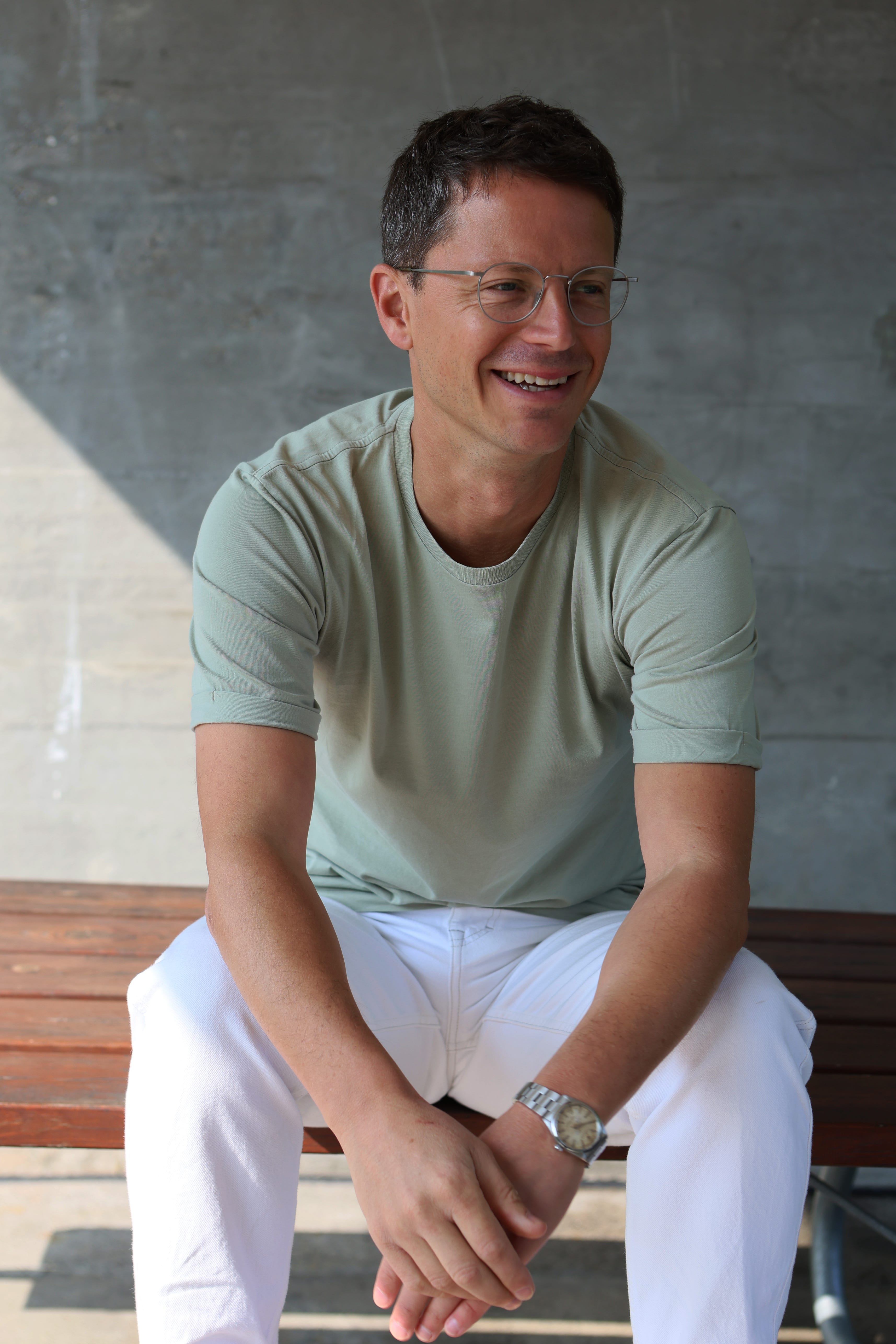
When you meet Moritz Estermann, it quickly becomes clear that he genuinely loves hosting people and creating experiences. For him, a combination of solid concepts and processes, carried out each day by good people, is just as essential as quality ingredients and fine wine.
While living in Berlin, he immersed himself in the city’s vibrant art and cultural scene, working at Sleek Magazine, Peres Projects gallery, Phillips De Pury Auction House, and PR agency Bureau N . He joined the management team of the renowned Grill Royal Group in 2011, where he helped develop standout projects including the Michelin-starred Pauly Saal and the French dining institution Le Petit Royal. As a creative force and part-owner, he oversaw every stage of the creation and operations of the Nordic Restaurant Dóttir , the wine bar Freundschaft, and the Michelin-starred Thai restaurant Kin Dee.
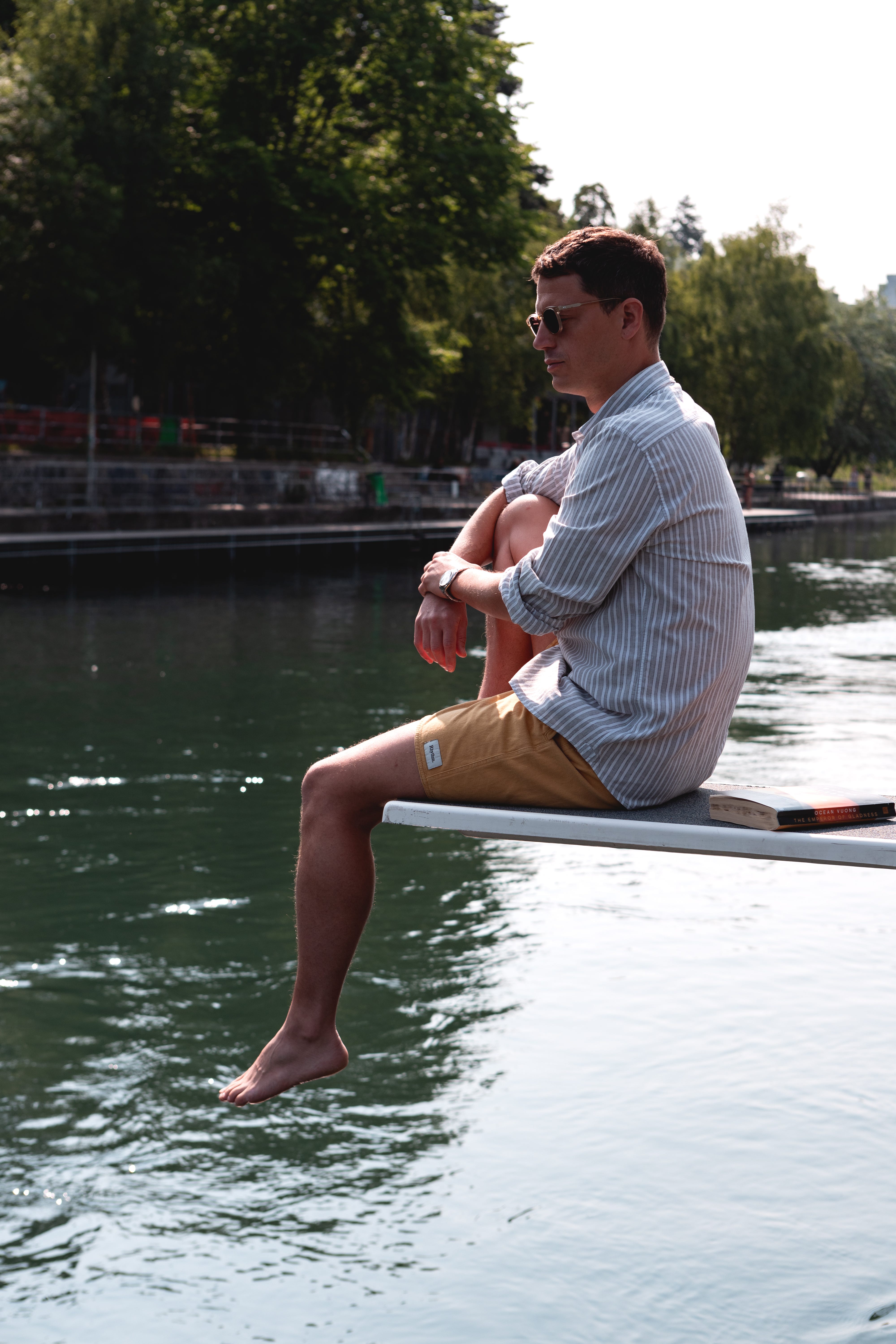
From 2018 to 2023, he led the development of the boutique hotel Château Royal in Berlin. As project lead and co-owner, he managed the entire process—from initial concept to post-opening operations— including interior planning in collaboration with the architects, brand and hotel concept development, corporate identity, and the implementation of all F&B outlets. In 2023, Moritz returned to Zurich and founded his consulting company, A La Bonne Heure. We met Moritz in Zurich at the beautiful Flussbad Oberer Letten. Over our conversation, we gained valuable insights from someone who truly knows the industry from the inside out.
What makes a meal a perfect meal for you?
Moritz Funny—I always think about this when people ask me for restaurant recommendations. It really depends. Who are you dining with? What day is it? What’s the occasion? What vibe do you want? Those things make such a difference. But one common denominator is good ingredients—the food you put into yourself should be of high quality. As for the surroundings, it depends on what you’re looking for. It could be a 3-Michelin-star, four-hour lunch, or a simple sausage you eat standing at the Würstelstand with good mustard.
How do you choose drinks to accompany a menu?
Moritz I usually choose the drinks first. I always look at the wine list before deciding what to eat. I check the wine list to see what exciting options are available or if there’s a bargain—a fair price for something special—and what makes sense to order. I tend to pair more based on the people and the vibe. Who’s with me? How much do we want to drink?
Very rarely do I enjoy wine pairings with a menu. That’s too much for me, and I can’t fully enjoy it unless I know the sommelier and the wine cellar, and they open six special bottles that I couldn’t find in this combination anywhere else. Then it can be interesting. Again, it really depends on the situation and what the people I’m with like.
What belongs on a well-set table?
Moritz Honestly, not that much. I love food sharing where you have just one plate and cutlery that you keep using. The only thing I pay close attention to is the wine glasses. That’s the one thing I don’t like to compromise on. I find it beautiful when someone puts effort into setting a table, but I don’t need decoration or flowers. I prefer it reduced to the max. I enjoy when the table itself has a good surface you like eating on—a good wooden table. I find it very uncomfortable to eat on overly clean and polished surfaces like stone, metal, or glass, where the cutlery clatters and your hand gets cold. I don’t need much on a table, but what’s there should be good.
When dining in a fine dining restaurant, plates, cutlery, and glasses are constantly being changed. How can this be reconciled with the topic of sustainability? Is this still appropriate for our times?
Moritz I think there is a lot of great tableware out there. I know chefs who enjoy collaborating with ceramicists to develop plates specifically designed for certain dishes. It’s an interesting approach—not really my thing but I understand it. I like having beautiful tableware as long as it’s not too out there—like a plate that looks like a UFO or having to eat out of a glass. That’s too much. I think it’s a kind of extravagant generosity that certain places celebrate. I’m not sure if “appropriate” is the right word, but I do appreciate the trend toward reducing the constant swapping of tableware. We don’t have to give up elegance, but we can still reinterpret luxury through the lens of responsibility.
I do understand chefs thinking in terms of plates—how they want flavors to develop or ingredients not to mix. But I also enjoy when things can blend, like in Thai cuisine.
What are the main turn-offs in a hotel, restaurant, or bar?
Moritz In a bar, bad ice. How can you mix a good drink if the ice isn’t right? In a hotel, it’s the small things— carelessness and a lack of generosity. I think generosity is a main driver of good hospitality.
What I really hate in hotels are those decorative pillows. You have beautiful, delicate, fresh bed linens, and then someone puts these cushions on top. We all know they just get tossed on the floor and probably don’t get cleaned. Why do hotels keep doing this?
Another turn-off in hotels are shower gels—or worse, hair and body wash combined—in a squeeze bottle fixed to the shower wall. If you don’t want to invest in good amenities, just leave it out altogether. And I dislike display stands in my room that try to sell me something. I paid for the room; I don’t want advertising. Give me valuable information instead. My friends tease me because I love well-made hotel brochures, but I want information that’s useful and genuinely interesting.
What I do love is when a hotel has really excellent guest management. It’s absolutely fine when they take notes on my preferences to offer me things that actually make sense. It shows me that someone took the time to understand who their guests are and what they like. I appreciate the result of thoughtful systems designed to create exceptional experiences.
Can you name three key factors you adjust in a hotel to make the guest experience something special?
Moritz Generosity is a key factor in hospitality and it’s not about money. It’s about being an honest counterpart. Taking just two minutes to listen and truly help someone makes all the difference. As a guest, I don’t want to be passed from person A to B because the first staff member isn’t responsible. I want to be recognized and taken seriously. I don’t care about titles—I just want your help.
Another important factor is in-room food and beverage options. Sometimes I don’t want to go down to the bar or restaurant for a coffee. Having a small kitchenette or coffee station nearby makes a big difference. Room service for coffee feels awkward. Until it arrives, it’s either cold, or I’m in the shower, or scrambling to get ready to open the door. I want to enjoy my first morning coffee or tea in my room, at my own pace, soaking in the space and moment.
Lastly, making things easy for the guest is crucial. I love it when I can simply hand over responsibility, knowing everything is taken care of intelligently and thoughtfully. It’s not about being pampered—it’s about people who understand the vibe and offer something that fits this seamlessly. Can I let go because someone is truly taking care of me?
Small gestures make a big impact.
For example, we recently arrived somewhere and were greeted with: “Hey, there’s sun in the garden right now at this table. Why not enjoy a coffee out there?” It was a unique moment—a beautiful way to arrive, made possible by someone who cared enough to offer a thoughtful welcome. Compare that to the awkwardness of standing in a lobby with a welcome drink, unsure where to put it. Or being handed a towel with no place to hang it. It’s about foreseeing the little things and smoothing the flow for guests. This kind of attentive anticipation is true luxury and it’s what makes all the difference. Instead of thinking about how expensive my stay was, I remember how kind they were to me and what a great time I had.
With your consulting company A la Bonne Heure, you work on concepts and their implementation for hotels and the hospitality industry. What sets you apart in the way you work?
Moritz I come from a background where I had the opportunity to develop and realize projects together with my business partners. Having the luxury to take the time to properly think things through, reflect, and plan accordingly is a huge advantage. I love working on that level. I enjoy collaborating with experts in their fields to create outstanding experiences.
I genuinely believe in the power of collaboration and in working with great people who bring different perspectives and experiences to the table.
That’s not only something I enjoy, it’s something I’m good at. It’s a beautiful way to test ideas and see which ones are worth pursuing. In my experience, that’s often how really cool things come to life. I always ask myself: “How would I do it if this were my house, my company?”
You work on a strategic level, but you also follow through with implementation.
Moritz Yes, because I come from a background of hands-on implementation. That’s a huge advantage, as I never propose anything I know won’t work, isn’t feasible, or is difficult to integrate into daily operations.
I believe in starting with a clear concept that everyone agrees on. You execute it and after six months, you review: Did we deviate from the original plan? If so, is it a good evolution or do we need to adjust? This approach helps prevent misunderstandings or unrealistic expectations from the start. For me, it’s a very clear way of working, removing emotional friction and uncertainty from the equation. Finding common ground is important to working toward a shared goal, and having clarity about that goal and the expected outcome is essential.
Part of your job is going out to eat and drinking wine. How do you manage to maintain balance and create a healthy counterbalance?
Moritz I need to play sports two to three times a week in order to feel good. Sometimes I have to force myself, and I also have a great partner who pushes me, but I always feel better afterwards. It’s something that’s purely physical, not about the mind, and that’s important.
When it comes to drinking, I try to focus on quality. But it’s not easy because there’s always another good wine waiting and I’m not the kind of person who leaves the party early.
I try to find balance with food. I cook as often as possible and try to avoid eating out unless it’s for testing something or meeting someone. I automatically eat less when I cook, because the process itself satisfies part of my hunger. But it’s definitely a big question for me: how to find balance between feeling good and not becoming too dogmatic or inflexible.
What detail in a hotel has recently really irritated you and which one really delighted you?
Moritz My family gave me a voucher for a hotel in Italy for my 40th birthday. The voucher was only valid for 12 months. When I called to set a date for my visit, they gave me a hard time as it was beyond the 12-month period. I seriously considered not going because I didn’t feel welcome. It ended up being a super nice stay though!
What really surprised me was the app from Six Senses. You could connect it to your room and use it to request anything, place orders, or even check your current invoice balance. But it wasn’t a substitute for attentive service. It was an add-on for guests with a tech affinity— impressive.
What’s your definition of success?
Moritz With the support of a great coach, I’ve arrived at a point where I acknowledge there are things I don’t enjoy doing and that I don’t have to do them. To have the liberty to let go of what doesn’t bring me joy, to focus wholeheartedly on what I love, to share good energy with others, and to make a living doing that—that’s success to me. Reaching this point was a long process and it’s a success that I am here now.
Takeaways from Moritz Estermann
Great hospitality blends concept and care
Strong ideas only come alive through generous, attentive people who execute them consistently.
Luxury is generosity and anticipation, not excess
Thoughtful gestures, ease, and seamless flow for the guest define true luxury more than flashy amenities.
Details make or break the experience
From proper wine glasses and good ice to quality in-room coffee setups, small elements signal respect and competence.
Successful concepts require clarity and feasibility
Moritz combines strategic vision with hands-on implementation.
Personal balance and freedom define success
For him, success means focusing on what he truly enjoys, and having the liberty to let go of what doesn’t bring joy.
Words Karin Novozamsky
Photography Haroun Masoet